

Speed Is the New Storefront. Friction is a Deal-Breaker
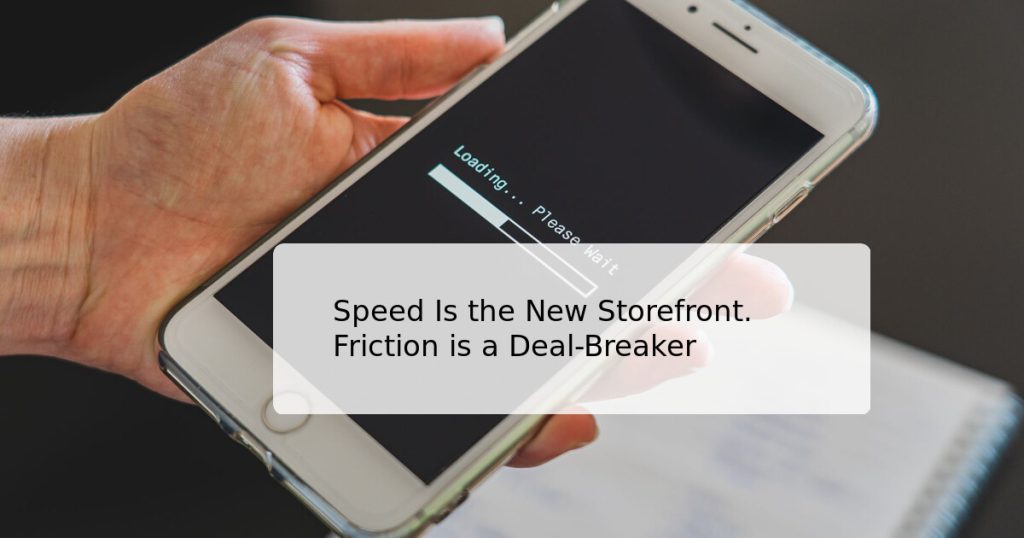
For Gen Z, online shopping is no longer a sequence of separate steps. Discovery, research, comparison, and purchase can happen in a single mobile session and often do. That compressed journey has created a new standard for digital commerce: if a brand slows shoppers down, it risks losing them altogether.
This is more than a preference for convenience. It reflects a fundamental shift in how Gen Z experiences the digital world. Speed has become part of the product.
The One-Session Shopping Journey
Gen Z may discover a product through a social post, validate it through reviews and videos, compare prices across retailers, and complete the purchase, all within minutes. The traditional funnel is becoming less linear and far more compressed.
That compression changes the cost of friction. A slow-loading product page is not merely an inconvenience. A confusing navigation menu is not just a minor design flaw. Each obstacle can interrupt the entire journey before a shopper reaches checkout.
Older models of e-commerce assumed that consumers might browse, leave, return later, and eventually purchase. Gen Z is more likely to make a rapid decision: continue, switch retailers, or abandon the search entirely.
The brands that win will be those that make every step feel immediate.
Gen Z’s Speed Standard Comes From Everyday Apps
Gen Z has grown up with services designed around immediacy. Food arrives after a few taps. A ride can be tracked in real time. Hotels, flights, payments, and entertainment are all accessible from the same device.
These experiences have reshaped what “good service” means. Gen Z does not evaluate an online store in isolation; it compares the experience with the fastest digital services it uses every day.
That creates a ruthless benchmark. If a retailer’s website feels slower or more complicated than a ride-hailing or food-delivery app, the brand appears outdated, even if its products are competitive.
Speed, in other words, is no longer a technical detail operating behind the scenes. It is visible to the customer and directly connected to trust.
Price Still Leads, but Fulfillment Can Close the Sale
Speed does not replace value. Price remains Gen Z’s top online shopping priority. In TGM Research’s survey of 1,141 Gen Z shoppers, 67% identified the best overall price as important, followed by free or low-cost shipping at 53% and fast delivery, including same-day or next-day options, at 44%.
But these priorities work together. Once shoppers find comparable products at similar prices, shipping costs and delivery speed can determine which retailer gets the sale.
This is where fulfillment becomes a competitive advantage. Two brands may offer the same product at nearly the same price, but the retailer with clearer delivery dates, lower shipping costs, and faster arrival is more likely to win.
Because Gen Z can compare those factors almost instantly, brands have less room to hide behind vague promises. “Ships soon” is weaker than a specific delivery date. “Free shipping available” is less persuasive than a clearly displayed threshold or delivery option.
The purchase decision increasingly depends on reducing uncertainty as quickly as possible.
Mobile Is Not a Smaller Desktop
For Gen Z, mobile is often the primary shopping environment, not a secondary channel to be optimized after the desktop experience.
TGM’s findings suggest that 75% of Gen Z shoppers primarily shop on smartphones, while 54% shop while working or multitasking. Thirty percent rely exclusively on shopping apps, and 70% prefer smartphones when placing orders over $150.
These behaviors have important implications. A mobile shopper may be distracted, moving between apps, or making a decision in a short window of attention. The experience must therefore support rapid progress without demanding unnecessary effort.
A successful mobile storefront needs:
- Fast-loading product and category pages
- Search that understands natural, imperfect queries
- Clear product information above the fold
- Simple filtering and comparison tools
- Prominent pricing, shipping, and delivery information
- Product recommendations that answer their needs
- Checkout forms that minimize typing
- Payment options such as digital wallets and one-tap checkout
- Navigation designed for thumbs, not mouse cursors
Mobile experiences should not be treated as scaled-down desktop websites. They are often the first and most influential interaction a customer has with a brand.
The Moments That Trigger Abandonment
Gen Z does not necessarily abandon a purchase because of one dramatic failure. More often, abandonment happens when several small delays accumulate.
A page takes too long to load. A product image appears late. The search results are irrelevant. The shipping cost is revealed only at checkout. The shopper cannot tell whether an item will arrive tomorrow or next week.
Each moment creates doubt, and doubt is dangerous when alternatives are only a tap away.
The most damaging friction points tend to be:
- Slow or clunky mobile pages
A sluggish site immediately falls short of the standard set by high-speed consumer apps. - Lengthy product discovery
Shoppers expect to move quickly from inspiration to information to purchase. If finding the right product takes too much effort, they may switch to a competitor. - Unclear navigation
Gen Z is unlikely to spend significant time learning how a retailer’s website is organized. - Complicated checkout
Long forms, forced account creation, unclear fees, and limited payment options can undo an otherwise strong shopping experience. - Uncertain fulfillment
Delivery speed and shipping cost should be easy to understand before the customer commits.
Convenience is no longer a special differentiator. It is becoming the baseline expectation.
Speed Is a Generational Priority
Although fast, intuitive commerce benefits every customer, Gen Z appears especially focused on how quickly and smoothly a purchase can be completed and received. Older shoppers, particularly those aged 65 and above, place greater emphasis on reassurance after the transaction, such as easy returns.
This distinction matters because it changes where brands should invest. A retailer targeting Gen Z may gain more from improving search speed, checkout flow, app performance, and delivery visibility than from adding another promotional message to the homepage.
For this audience, the experience is part of the brand promise. A brand that communicates energy, relevance, and immediacy cannot deliver a slow, confusing shopping journey without creating a contradiction.
The Strategic Shift: Optimize for Momentum
The central question for brands should not be, “How many features does our shopping experience offer?”
It should be: “How much momentum does the customer lose at each step?”
That requires measuring more than page views and conversion rates. Brands should examine:
- Time from landing on a page to finding a relevant product
- Search-to-product-click rates
- Mobile page load and interaction times
- Checkout completion by device and payment method
- Drop-off at shipping-cost and delivery-date screens
- Conversion rates for app, browser, and wallet users
- Repeat purchases following delayed or failed deliveries
These metrics reveal where the customer’s momentum breaks down.
A fast site cannot compensate for poor product relevance. A great search tool cannot overcome unexpected fees. Same-day delivery cannot rescue a checkout process that feels unsafe or exhausting. Speed works as part of a broader system: discovery, information, payment, and fulfillment must all reinforce one another.
The Bottom Line
Gen Z has compressed the shopping journey, and raised the standard for every brand competing within it.
They expect to discover products quickly, validate their choices easily, compare alternatives instantly, and complete purchases without unnecessary effort. Price remains essential, but when products are similar, shipping cost and delivery speed can determine the winner.
The implication is clear: mobile performance, search quality, checkout simplicity, and fulfillment transparency are no longer back-end improvements. They are front-line brand experiences.
For Gen Z, speed is not a bonus. It is the minimum acceptable expression of customer care.