
Augmented Reality in Marketing. Does it sill work?
VR and AR in marketing convert abstract choices into tangible experiences by letting customers see, try, and feel products before purchase.
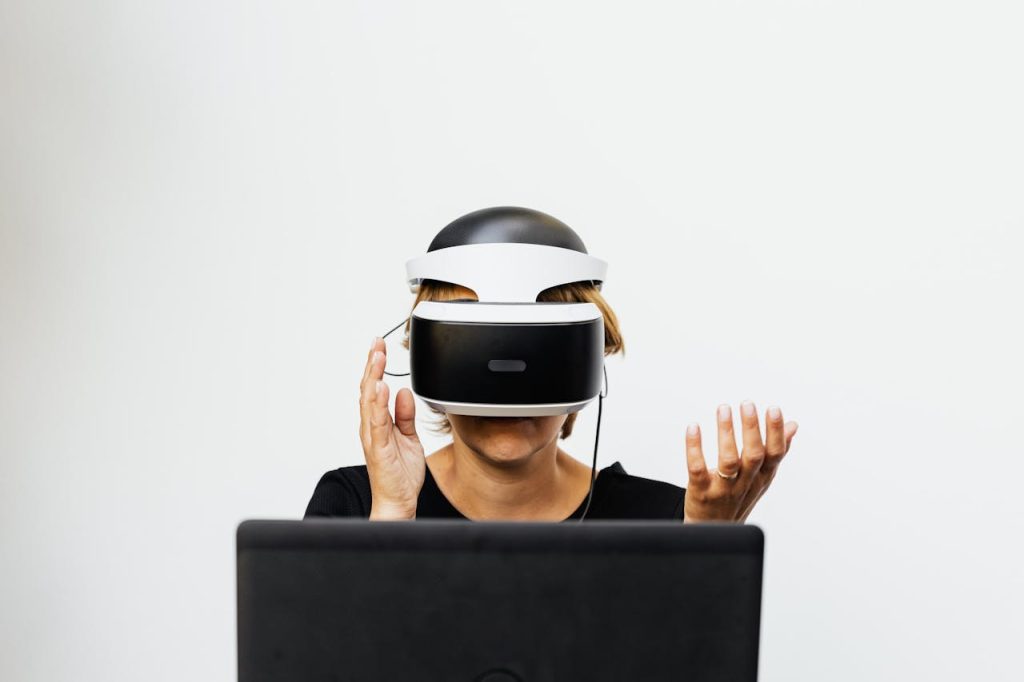
The emergence of new technologies like AR and VR in marketing campaigns has transformed the way businesses connect with their target audience. These immersive experiences offer a unique way to capture the attention of consumers and leave a lasting impact. While there are challenges in terms of cost and learning curve, the opportunities to create memorable campaigns and drive engagement are vast.
The Power of Augmented Reality and Virtual Reality in Marketing Strategy
Augmented Reality (AR) and Virtual Reality (VR) technologies are used by some companies to build brand awareness in their marketing campaigns. These immersive technologies offer a unique and interactive experience that captivates the audience and creates a lasting impression. However, integrating AR and VR into marketing strategies presents both challenges and opportunities for companies of all sizes.
One of the main challenges is the cost associated with developing AR and VR experiences. Creating high-quality and engaging content can be expensive, especially for small businesses with limited budgets. Additionally, there is a learning curve for companies to understand how to effectively use these technologies to deliver their message to consumers.
On the other hand, the opportunities that AR and VR offer are immense. Companies can create memorable and impactful campaigns that drive engagement and increase brand loyalty. By leveraging these technologies, businesses can differentiate themselves from competitors and create a unique selling proposition in the market.
Key success factors across successful usage of VR/AR in marketing are related to:
- Solving a real consumer problem (try-before-you-buy, visualization).
- Low friction UX (mobile AR, in-app integration).
- Emotional or viral appeal (surprise, shareability).
- Measurable business outcomes (conversion uplift, store visits, dwell time, PR reach).
Industries where AR/VR creates memorable experiences and clear value
Retail — furniture, apparel, cosmetics. AR and VR reduce purchase friction by enabling “try before you buy” experiences for fit, scale, and color, which lowers returns and increases conversion and average order value. These technologies are memorable because they provide personalized, in‑context visualizations—placing furniture in a room or trying on makeup—that turn browsing into an interactive experience.
IKEA Place (AR app) let users place true-to-scale 3D furniture in their home via mobile AR. It solved purchase hesitation by showing fit/style in-context; reduced returns and increased confidence to buy. Sephora used Virtual Artist (AR try-on). Mobile/desktop AR tool to virtually try on makeup products via face-tracking. It lowered friction to experiment, increased online conversion and average order value.
In automotive industry immersive virtual test drives and virtual showrooms scale demonstrations, showcase configurations and features without inventory or location limits, and shorten the sales cycle for high‑consideration purchases. Customers remember these experiences because they can feel performance and design in compelling environments that static specs cannot convey.
Audi (VR test drives) created VR test drives and configurators at events and showrooms allowing customers to experience cars and environments not available locally. It scaled immersive test drives, accelerated consideration for high-value purchases.
Home improvement and DIY — paint, flooring, fixtures. AR helps customers visualize outcomes at home, reducing indecision and costly mistakes while increasing confidence to purchase higher‑margin products. Realistic previews such as wall color or flooring changes make design choices tangible and emotionally persuasive.
Dulux Visualizer (AR paint visualizer). Dulux created an app to preview paint colors on walls in real time using AR. It reduced uncertainty in color choice; drove retailer sales and DIY confidence.
Where else can AR/VR meet the goals?
In real estate and architecture virtual walk‑throughs accelerate decisions on off‑plan properties, reduce the need for frequent site visits, and improve stakeholder alignment during design and construction. Experiencing a finished space or renovation before completion creates stronger emotional buy‑in.
Virtual tours and immersive storytelling inspire bookings by previewing rooms, experiences, and destinations, moving customers from inspiration to purchase. Prospects remember and commit because they can “feel” a trip or stay before they go.
Pepsi Max Unbelievable Bus Shelter (AR/VR stunt). Bus shelter screen showed hyperreal AR scenes (alien, meteor) that surprised passersby; filmed reactions for ads. Why it worked? Viral social sharing, high emotional engagement, aligned with brand’s playful positioning.
Nike (VR in flagship stores / product launches). In-store VR experiences to demo products or simulate sports scenarios (e.g., virtual running tracks; immersive product stories). It created memorable brand experiences, drove store visits and product interest.
Across these industries, successful AR/VR initiatives share four traits: they solve a real decision problem (visualization, risk reduction, or training), they offer low-friction access (mobile AR, in-store kiosks, or event setups), they produce measurable business outcomes (higher conversion, fewer returns, or improved training effectiveness), and they deliver an emotional or practical payoff that justifies the investment.
VR/AR at heavy industry
Simulated demos of complex machinery demonstrate capabilities safely, support training, and shorten procurement cycles for expensive assets. Customers and buyers retain more from contextual demonstrations than from technical specifications alone.
AR for service and training Caterpillar deployed AR-enabled service support and training using HoloLens and mobile AR. Field technicians receive step-by-step overlays and remote expert assistance, reducing diagnostic time and improving first-time fix rates. Reported outcomes included faster repairs and reduced downtime on complex heavy equipment.
Volvo CE used VR for operator training and product demonstrations and HoloLens for remote service support. VR simulators allowed safe training on excavators and loaders; HoloLens enabled remote specialists to guide field technicians with live annotations. Results cited include improved training throughput and faster service resolution.
Liebherr implemented VR simulators for crane operator training and evaluated HoloLens for remote maintenance support. Reports from deployments showed improved simulator-based training retention and reduced need for on-site expert visits.
Shell trialed AR headsets for complex plant maintenance tasks, providing technicians with procedural overlays and remote expert links, which reduced errors and time spent on interventions in high-risk environments.
VR/AR at heavy industry – valuable usage examples
AR and VR in heavy industries transform how equipment is sold, operated, maintained, and taught. In construction, mining, and heavy equipment manufacturing they enable realistic operator training and safe simulation of failure scenarios; in field service they provide hands-free AR overlays, step-by-step repair guides, and remote expert annotation to speed diagnostics and increase first-time fixes.
In site planning and factory commissioning VR lets teams validate layouts, crane paths, and workflows before costly installation; in sales and procurement immersive demos and configurators allow buyers to evaluate machines, attachments, and jobsite performance without physical units; in maintenance and asset management AR dashboards overlay sensor data for predictive interventions and faster parts identification; and in safety and compliance VR recreations train crews on hazards and emergency response.
Together these uses reduce downtime, lower training and service costs, improve safety, accelerate purchasing decisions, and increase operational accuracy and productivity.
Summary
VR and AR in marketing convert abstract choices into tangible experiences by letting customers see, try, and feel products before purchase.
In home improvement and DIY, AR visualizers for paint, flooring, fixtures, and furniture remove uncertainty, speed decisions, increase confidence to buy higher‑margin items, and reduce costly returns or rework. In automotive, VR test drives, configurators, and immersive demos showcase performance and options without needing all physical models, shortening the sales cycle, increasing engagement at events and showrooms, and helping buyers choose higher‑spec configurations. In retail, virtual try‑ons, in‑home furniture placement, and immersive product storytelling lower purchase friction, lift conversion and average order value, cut returns, and generate shareable brand experiences.
Successful campaigns combine problem‑solving (visualization, risk reduction), low‑friction access (mobile AR, in‑store kiosks, VR at events), measurable business metrics (conversion, return rates, sales cycle length), and an emotional or practical payoff that justifies investment.